
EAV Technology
Sonifex
Sonifex has been manufacturing audio equipment for more than 40 years. Committed to excellence in design, Sonifex has earned a reputation for building high quality, reliable professional audio products for broadcasting and security applications.
REDBOX Audio Interfaces
| Sonifex Redbox Range of Audio Interfaces | |
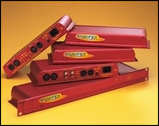  | Designed and manufactured to the highest specifications, Redbox is a range of analogue and digital audio interface boxes for use in various professional applications including radio stations, TV studios, home studios and video and recording suites.
|
 |
| Digital Audio Converters | ||||
| RB-ADDA | Combined A/D and D/A Converter | more >> |  | |
| RB-ADDA2 | Combined A/D and D/A Converter, 24bit 192kHz | more >> |  | |
| RB-SC1 | Sample Rate Converter | more >> |  | |
| RB-SC2 | Dual Sample Rate Converter, 24bit 192kHz | more >> |  | |
| RB-DAC1 | Digital to Analogue Converter | more >> |  | |
| RB-SP1 | Digital Splitter and Combiner | more >> |  | |
| Back to Redbox Contents > | ||||
| Synchronisation Add-On Boards | ||||
| RB-SYA | Analogue Video Sync Add-On Board | more >> |  | |
| RB-SYD | Digital Video Sync Add-On Board | more >> |  | |
| RB-SYE | AES/EBU Sync Board | more >> |  | |
| RB-SYW | Word Clock Sync Board | more >> |  | |
| Back to Redbox Contents > | ||||
| Synchronisers, Delays & Silence Detectors | ||||
| RB-DS2 | Stereo Delay Synchroniser & Time-Zone Delay | more >> | 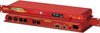 | |
| RB-DS2R | Remote Switch Panel For RB-DS2. | more >> |  | |
| RB-PD2 | Stereo Profanity Delay | more >> | 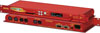 | |
| RB-DD4 | 4 Channel Digital Audio Delay | more >> |  | |
| RB-SD1 | Silence Detect Unit | more >> |  | |
| RB-SD1IP | Silence Detection Unit With Ethernet & USB | more >> |  | |
| RB-DSD1 | Digital Silence Detect Unit | more >> |  | |
| RB-DSD8 | 8 Channel Silence Switcher | more >> | 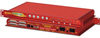 | |
| RB-FS82 | Audio Failover Switcher, 8 Main I/O, 2 Standby I/O | More >> |  | |
| Back to Redbox Contents > | ||||
| Matching Converters | ||||
| RB-UL1 | Unbalanced to Balanced Single Converter | more >> |  | |
| RB-UL2 | Dual Unbalanced to Balanced Converter | more >> |  | |
| RB-UL4 | Quad Unbalanced to Balanced Converter | more >> |  | |
| RB-LU4 | Quad Stereo Balanced to Unbalanced Converter | more >> |  | |
| RB-BL2 | Unbalanced to Balanced Bi-Directional Converter | more >> |  | |
| RB-BL4 | Dual Stereo Bi-Directional Matching Amplifier | more >> |  | |
| RB-PA2 | Dual Stereo RIAA Phono Amplifier | more >> |  | |
| RB-LI2 | Stereo Line Isolation Unit | more >> |  | |
| RB-PLI6 | 6 Way Mono Passive Line Isolation Unit | more >> |  | |
| Back to Redbox Contents > | ||||
| Audio Distribution Amplifiers | ||||
| RB-DA6 | 6 Way Stereo Distribution Amplifier | more >> |  | |
| RB-DA6G | 6 Way Stereo Distribution Amplifier With Output Gain Control | more >> |  | |
| RB-DA6P | 6 Way Syereo Distribution Amplifier With Phoenix Connectors | more >> |  | |
| RB-DA6R | 6 Way Stereo Distribution Amplifier With RJ45 Connectors | more >> |  | |
| RB-DA6RG | 6 Way Stereo Distribution Amplifier With RJ45 Connectors & Output Gain Control | more >> |  | |
| RB-DA4x5 | 4 Input, 4 x 5 Output Distribution Amplifier/Mixer | more >> |  | |
| RB-DDA6A | 6 Way AES/EBU Digital Distribution Amplifier | more >> |  | |
| RB-DDA6A-2P | 6 Way Stereo AES/EBU Digital Distribution Amplifier with Dual Power Supplies | more >> |  | |
| RB-DDA6S | 6 Way S/PDIF Digital Distribution Amplifier | more >> |  | |
| RB-DDA6W | 6 Way Word Clock Distribution Amplifier | more >> |  | |
| RB-DDA22 | Digital Audio Distribution Amplifier With Multiple Outputs | more >> |  | |
| RB-AES4B3 | Quad 3 Way AES/EBU Passive Splitter BNC Connectors | more >> |  | |
| RB-AES4X3 | Quad 3 Way AES/EBU Splitter XLR Connectors | more >> |  | |
| RB-MS4X3 | Quad 3 Way Passive Microphone Splitter | more >> |  | |
| Back to Redbox Contents > | ||||
| Headphone Distribution Amplifiers | ||||
| RB-HD1 | Stereo Headphone Amplifier | more >> |  | |
| RB-HD2 | Dual Stereo Headphone Amplifier | more >> |  | |
| RB-HD6 | 6 Way Headphone Distribution Amplifier | more >> |  | |
| RB-DHD6 | Digital 6-Way Headphone Distribution Amplifier | more >> |  | |
| Back to Redbox Contents > | ||||
| Mixers, Source Selectors & Switchers | ||||
| RB-SS10 | 10 Way Stereo Analogue Source Selector/Mixer | more >> |  | |
| RB-DSS10 | 10 Way Stereo Digital Source Selector | more >> |  | |
| RB-PMX4 | 10 Input, 4 Output Analogue Preset Mixer | more >> |  | |
| RB-DMX4 | 4 x 4 Channel Digital Audio Mixer/Router | more >> |  | |
| RB-SSML1 | Mic/Line Source Selector with Compressor/Limiter | more >> |  | |
| RB-OA3 | 3 Studio On-Air Switcher | more >> |  | |
| RB-OA3R | Remote Switch Panel For RB-OA3 | more >> |  | |
| RB-OA3C | Expansion Unit Cable Kit For The RB-OA3 | more >> |  | |
| Back to Redbox Contents > | ||||
| Microphone Amplifiers & Limiters | ||||
| RB-MA1 | Single Microphone Amplifier | more >> | 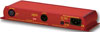 | |
| RB-MA2 | Dual Microphone Amplifier | more >> | 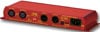 | |
| RB-DMA2 | Dual Digital Microphone Amplifier | more >> | 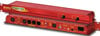 | |
| RB-ML2 | Microphone and Line Level Limiter | more >> | 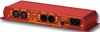 | |
| RB-SL2 | Twin Mono, or Stereo, Limiter | more >> | 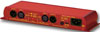 | |
| Back to Redbox Contents > | ||||
| Stereo To Mono Converters | ||||
| RB-SM1 | Single Stereo to Mono Converter | more >> | 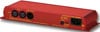 | |
| RB-SM2 | Dual Stereo to Mono Converter | more >> | 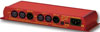 | |
| Back to Redbox Contents > | ||||
| Power Controllers | ||||
| RB-LC3 | 3 Way Light/Power Controller | more >> | 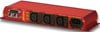 | |
| Back to Redbox Contents > Talkback & Communications | ||||
| RB-MM1 | Mix-Minus Generator | more >> |  | |
| RB-MTV1 | Voiceover Monitor with Talkback | more >> |  | |
| RB-IPE | IP Extender for GPIO & Analogue Control Signals | more >> |  | |
| Back to Redbox Contents > Tone Generators | ||||
| RB-TGHDB | Multi-channel HD tone generator with BNC outputs | more >> |  | |
| RB-TGHDX | Multi-channel HD tone generator with XLR outputs | more >> |  | |
| Back to Redbox Contents > Encoders & Decoders | ||||
| RB-DEED8 | Dolby® E Encoder 8 Channel, Digital Inputs | more >> |  | |
| RB-DEDD8 | Dolby® E & Dolby Digital Decoder 8 Channel, Digital Outputs | more >> |  | |
| Back to Redbox Contents > Video Distribution Amplifiers | ||||
| RB-VHDA8 | HD/SD-SDI 1 Input 8 Output Video Distribution Amplifier | more >> |  | |
| RB-VHDA2x4 | 3G/HD/SD-SDI 2 Input, 8 Output Video Distribution Amplifier | more >> |  | |
| Back to Redbox Contents > Video Embedders & De-Embedders | ||||
| RB-VHDMA8 | 3G/HD/SD-SDI De-Embedder, 8 Channel Analogue Outputs | more >> |  | |
| RB-VHEMA8 | 3G/HD/SD-SDI Embedder, 8 Channel Analogue Inputs | more >> |  | |
| RB-VHCMA4 | 3G/HD/SD-SDI Embedder & De-Embedder, 4 Channel Analogue I/O | more >> |  | |
| RB-VHCMD16 | 3G/HD/SD-SDI Embedder & De-Embedder, 16 Channel Digital I/O | more >> |  | |
| RB-VHDDD8 | 3G/HD/SD-SDI De-Embedder Dolby® E & Dolby Digital Decoder & Re-Embedder | more >> |  | |
| RB-VHEDD8 | 3G/HD/SD-SDI De-Embedder, Dolby® E Encoder & Re-Embedder | more >> |  | |
| Back to Redbox Contents > Accessories | ||||
| RB-RK1 |  | Front Panel Rack Mount Kit for small Redbox | more >> |  |
| RB-RK2 |  | Rear Panel Rack Mount Kit for small Redbox | more >> |  |
| RB-RK3 |  | Rear Panel Rack Mount Kit for large Redbox | more >> |  |
| RB-FR1 |  | Front Panel Kit for large Redbox | more >> |  |
| RB-FR2 |  | Front Panel Kit for RB-DAC1, RB-HD1 | more >> |  |
| RB-FR3 |  | Front Panel Kit for RB-HD2 | more >> |  |
The RB-PD2 is a stereo audio profanity delay used for live broadcast programs to prevent unwanted or obscene material from being transmitted. It features an automatic audio stretch algorithm that allows between 2 and 55 (*) seconds of delay to be built up live whilst “on air”, whilst maintaining the correct pitch. The delay can also be acquired whilst playing a pre-selected audio file on a CompactFlash™ memory card. When the program is complete, the audio stretch algorithm seamlessly reduces the delay to zero.
The RB-PD2 has both balanced analogue and AES/EBU digital audio inputs and outputs on 3 pin XLR connectors and provides sample rates up to 48kHz at 24 bit. It can act as acombined A/D and D/A unit meaning that analogue inputs can be output as AES/EBU or vice-versa.
The delay can be initiated by pressing the BUILD DELAY button on the front panel. A front panel display shows the amount of delay being built-up, up to the amount initially selected.
There are several ways to make sure that any unwanted material is removed from the audio at the outputs. A COUGH function, activated from a dedicated front panel button, allows locally generated sounds being presented at the inputs, such as the presenter coughing or equipment switching noises, to be discarded.
The DUMP function, which is also activated from a front panel button, has 2 different modes. The first DUMP mode removes a section of audio that has already been buffered, by a pre-selected amount. The second DUMP mode plays a pre-selected audio file on the Compact Flash™ memory card. When the file has finished playing, the delay is then equal to the duration of the file. The DUMP button can be used multiple times to use up the built-up delay and once used, the unit automatically starts to rebuildthe original delay time.
As a last resort, all the buffered audio can be discarded by pressing and holding the DUMP button which activates the DROP function.
At the end of a radio show when you want to broadcast live, the delay can be ramped down by pressing the front panel EXIT DELAY button.
A dedicated record mode allows audio presented at either the analogue or digital inputs to be recorded to a linear WAV file on a Compact Flash™ memory card. Additionally, the card format used is PC readable, allowing pre-recorded linear WAV files to be transferred easily from a PC or other such device.
Sonifex RB-AEC DSP based acoustic echo canceller
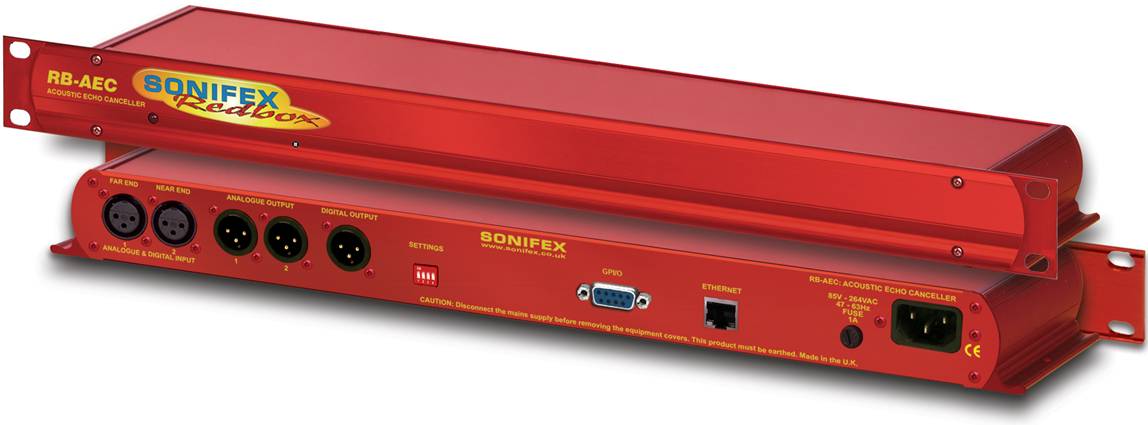
The RB-AEC is a DSP based acoustic echo canceller primarily designed for the benefit of studio television and radio presenters.
When a studio presenter's microphone signal is played out through a monitor speaker in the control room, it can be picked up by the control room microphone(s) and returned to the presenter’s earpiece as an undesirable echo.
In circumstances where green screen video processing is taking place, the delay can be greater than 200ms.
Additionally, the dimensions, occupancy and distance between mouth and microphone can further influence the echo.
The RB-AEC is used to remove the entire control room monitor speaker output from the presenter’s feed by adapting to the environment in which the control room microphones are placed.
Although acoustic echo cancellation is more commonly implemented in telephony systems, the Sonifex RB-AEC is designed to produce broadcast quality cancellation.
Much like during a conference call configuration between two rooms, each room has a microphone and speaker to conduct a conversation.
When an occupant of one room speaks, it takes a certain length of time before it is received in the second room.
Without a suitable solution this 'delayed' signal can then be captured by the microphone in the second room and returned back to the first room as an echo.
In the particular example of TV production, as well as the processing/transmission delay, sound reflections from the control room monitor speaker into the control room microphone(s) cause the studio earpiece to suffer further delay.
The sound reflections in the control room vary with the contents of the room, including any personnel present, and different frequencies produce varying reflections across various types of surfaces and magnitudes within the room.
Sonifex RB-DS2 Stereo Delay Synchroniser & Time-Zone Delay
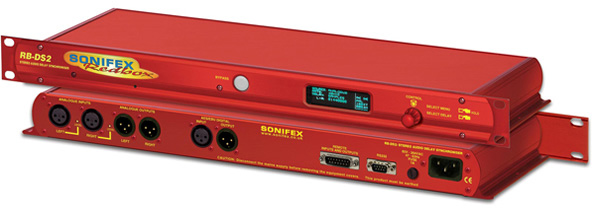
The RB-DS2 is a stereo audio delay synchroniser used for resynchronising audio to video following delay processes such as standards conversion, transmission delay, logo insertion, video aspect ratio conversion and network delays. It can be used for fixed installations to correct a permanent audio delay, or on an intermittent basis to provide occasional correction, for example for live links. Accepting digital audio signals up to 96kHz, 24 bit, the sonic quality of the RB-DS2 is superb and silent switching is used to provide the smoothest, cleanest audio delay available.
The RB-DS2 has both balanced analogue and AES/EBU digital audio inputs and outputs on 3 pin XLR connectors. It can act as a combined A/D and D/A unit meaning that analogue inputs can be delayed and output as AES/EBU or vice-versa. It is a stereo delay, but can also be used as a dual mono delay, to process each audio path separately, or as a mono delay only.
Brochure : http://www.sonifex.co.uk/company/logos-images/catalogues/redbox-singlepages/rb-ds2.pdf
Sonifex RB-OA3 Studio On-Air Switcher
The RB-OA3 is a 1U rack-mount, unity gain on-air switcher, capable of switching three stereo pairs between three studios. Each studio can control the transmission path together with two peripheral paths for equipment such as a codec or hybrid and there is also a "Last studio to offer" bus, allowing for seamless and continuous broadcast from any multi-studio radio network. A "sustain" mode allows for a sustaining system, such as a PC automation system, to control the broadcast. Multiple RB-OA3 units can be connected together to switch more studios or more stereo pairs.
The switching is achieved using relays, except the "last studio to offer" which is switched by an analogue switch. The transmission path is switched using latching relays. This means that if there is a power failure to the unit, the transmission path will remain selected.
All studios are connected using 25 way D-types for electronically balanced audio signals and control is achieved using 15 way D-types, connecting to an external control unit such as the Sonifex S2-MTBS mixer control panel. A transmission mix connection is included to mix audio which is generic to all studios into the transmission path. This could be used for jingles or adverts for example. The RB-OA3 also allows for the control of a profanity delay to be shared by all connected studios.
Each studio has the ability to offer the transmission. Once offered, the transmission is fed to the other studios via the "last studio to offer" bus. The next scheduled station can then fade in the transmission and accept at the appropriate time meaning the transmission can be continuous
The "sustain" mode can be used to control an automated studio, such as an overnight music system. In this case, station control will switch to the automated system by holding the Offer button down for a number of seconds, pre-determined by a calibration routine. This will select the sustaining studio, set as studio three, which will immediately offer control back to all remaining studios. Any studio can then accept to resume orthodox broadcasting.
The RB-OA3 can be expanded to switch between up to 5 studios or up to 6 stereo pairs by connecting a multiple of units together via RJ45 serial connections. With the addition of a single unit, expansion in "studio" mode allows for 2 additional studios to take control of the transmission path and additional equipment. If the expansion is made in "bus" mode, then three additional stereo channels can be added. 4 x RB-OA3 units can be connected together to switch 6 stereo pairs between up to 5 studios.
The modes are configured by dip switch configurations, on the rear of each unit. Two dip switches control the unit ID and there are two switches which decide between "studio" and "bus" modes. A master unit, defined by a preset ID, conducts all communication between all units.
Brochure : http://www.sonifex.co.uk/company/logos-images/catalogues/redbox-singlepages/rb-oa3.pdf
Sonifex Signal LED Studio Illuminated Signs
Designed for studio installers and systems integrators, these elegant RGB LED signs contain the control electronics themselves so that they can be simply configured for colour and operation on site. The signs are flush mounted as standard but an optional kit can be used to end-mount them to the wall. There is also a double-sided end-mounted version which can be used, for example, in corridors, so that different wording is displayed on each side of the sign, or the same wording in a different orientation on each side.
Each sign is 40cm or 20cm long. The 40cm signs can be split into two 20cm sides which can be separately, or jointly controlled, e.g. a 40cm 'ON AIR' sign, or twin 2 x 20cm signs, such as 'ON AIR' and 'MIC LIVE'. There is a wide range of different lettering available and the colours of the signs can be chosen from white, green, red, blue, yellow and orange. The signs can be installed and then configured for operation using accessible DIP switches.
Display modes available are: to be on constantly, to flash, to pulse, or to switch off using two control pull-low inputs which can control the whole sign, or either side of the sign. Each sign is supplied with a 6V DC power supply with international mains fitments and a 5m cable.
Sonifex CM-CU1 Commentator Unit
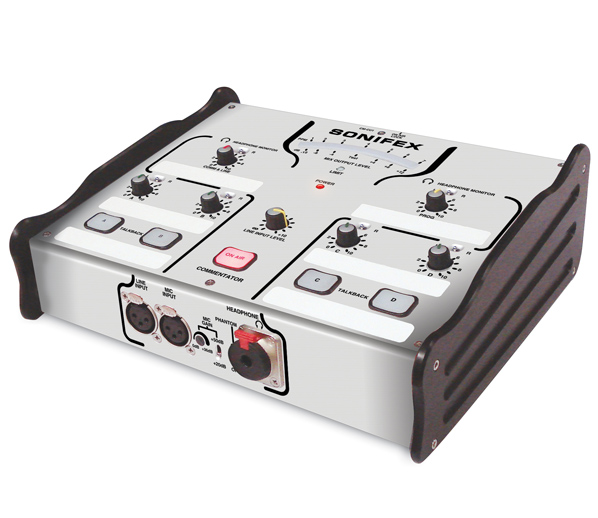
The CM-CU1 offers the same high quality, robust specification as the CM-CU21, with a feature set tailored to single commentator applications.
It provides a fully featured commentator position and a line-level input. The unit has an individual commentator output, with an additional output providing a mix of commentator and line input audio. A limit indicator on the main panel shows when the adjustable limiter on the main output is active, and a bright 21 segment LED PPM meter, which can be disabled, shows the main output level.
The line input can be configured to remain present at the mix output even if the commentator is off air, making it useful for routing crowd effects or pre-recorded material to the programme feed. Its presence in the commentator’s headphones is also configurable to suit the application.
Four talkback output channels, with a built in limiter, are available to the commentator and they can be linked to provide simultaneous operation. Activation of one or more talkback channels removes the commentator audio from the main output until all talkback channels are deactivated.
A wide input gain range and switchable phantom power allows support of a variety of microphone types including low output ribbon mics, headsets and high output phantom powered microphones. There are 5 transformer balanced return audio inputs which, along with the commentator input, are routed to the headphone monitor controls. With these headphone controls, any monitor input can be adjusted and sent to either the left, right or both ears.
Brochure : http://www.sonifex.co.uk/company/logos-images/catalogues/cm-cu1_cat.pdf
Sonifex CM-CU21 Commentator Unit
The CM-CU21 is a high quality, portable Commentator Unit. Its sturdy construction and flexibility of features make it suitable for use in a wide variety of environments.
It provides two fully featured commentator positions and a third guest position that can alternatively be used as a line-level input. Each position has an individual output, with two additional outputs providing a mix of all active commentary channels. A limit indicator on the main panel shows when the adjustable limiter on the mix outputs is active, and a bright 21 segment LED PPM meter, which can be disabled, shows the main output level.
Two talkback output channels, with a built in limiter, are available to each of the two main commentators and they can be linked to provide simultaneous operation.
A wide input gain range and switchable phantom power on each commentary position allows support of a variety of microphone types including low output ribbon, headsets and high output phantom powered microphones. There are 4 transformer balanced return audio inputs which, along with the commentator inputs, are routed to the headphone monitor controls. With these headphone controls, any monitor input can be adjusted and sent to either the left, right or both ears.
A GPIO port gives an open-collector driven output indication of any active On-Air or talkback channel and four remote inputs provide an external call/alert to each of the talkback controls.
The unit has a built in line-up tone generator for easy channel identification and cabling checks. When enabled the test-tone is routed to the required output simply by pressing the corresponding on air or talkback button.
An On-Air lock switch prevents the On-Air buttons from being accidentally deactivated and a T/B Gang switch links the operation of talkbacks A & B.
A flexible range of options allow the Commentator Unit to be customised to better suit the operational and user’s personal requirements. These include options for momentary or latching operation of the talkback buttons, permanently enabling or disabling any of the commentator inputs, default headphone signal routing and main panel indicator illumination levels.
The CM-CU21 Commentator Unit can be powered from a universal mains input between 85-264V AC at 47-63Hz, or from a 12-24V DC input.
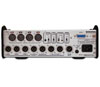
| Angled View | Top View | Front View | Rear View | Side View |
Users Guide http://www.sonifex.co.uk/company/logos-images/handbooks/cm-cu21_hb.pdf
Brochure http://www.sonifex.co.uk/company/logos-images/catalogues/cm-cu21.pdf
Sonifex Reference Monitors
RM-2S4 Reference Monitor, 2 LED meters, 4 stereo channel audio inputs.
Audio inputs on the RM-2S4 can be analogue or digital because they are autoswitching using the left Neutrik™ XLR for AES/EBU, or both Neutrik™ XLRs for analogue inputs and they can be used in any combination.
Analogue inputs can be balanced or unbalanced in any combination. The digital inputs have switchable AES/EBU termination for (close-range) bridging operation and there is extra global input gain available for both analogue and digital low-level sources.
Sources (and additional banks of sources, if fitted) are selected via a front panel rotary encoder, with clear LED indication of the current selection. A pair of line-level audio outputs, configurable as analogue or AES/EBU digital, follow the selected source at either a fixed level or one mirroring the loudspeaker volume.
The level of the chosen source is displayed on a pair of bright, multicoloured 53-segment bargraph meters, with a choice of seven accurately modelled scales/responses to suit different applications and local preferences. Clear scale labels are provided for you to chose the scale displayed and the meter brightness can be adjusted from the front panel. A separate phase meter indicates channel correlation or phase error conditions. On the rear panel, open-collector alarm outputs provide hardware indication of sustained underlevel, overlevel, phase errors and digital source lock.
Six illuminated pushbuttons provide access to a range of audio ‘modifiers’ – instant dimming of the volume, individual muting of each audio channel, stereo-to-mono conversion, phase inversion and Middle+Side transcoding. On the rear panel, logic-level inputs allow direct remote access to the DIM and MUTE functions.
The three-way loudspeaker system is fed via a DSP-based active crossover and a trio of highly efficient Class-D amplifiers. Careful attention to driver selection, materials and case design, plus active DSP equalisation, has ensured a flat response and outstanding reproduction from such a shallow unit. A protective limiter prevents damage to the loudspeakers under overload conditions and the front-panel headphone socket automatically mutes the internal loudspeakers when a plug is inserted. A Balance control allows you to alter the stereo imaging of the left and right channels.
A further five-band parametric equaliser can be accessed for room-equalisation purposes via Sonifex SCi Windows-based remote control software. Source selection, status monitoring and unit ID functions, plus firmware updates to add extra functionality, are all accessible remotely via both USB and RS232 connections in conjunction with Sonifex SCi software. The open control protocol also allows operation with terminal programs or customised applications.
Optional additions to the RM-2S4 include HD video input expansion cards, allowing multiple AES groups embedded within an HD-SDI or SD-SDI signal to be de-embedded and monitored, either with (RM-HD1E) or without (RM-HD1) Dolby® E or Dolby® Digital encoding.
The RM-2S4 unit operates from global mains voltages (85-264V AC, 47-63Hz) without adjustment.
RM-4C8 Reference Monitor, 4 LED meters, 8 channel inputs, dual selectors.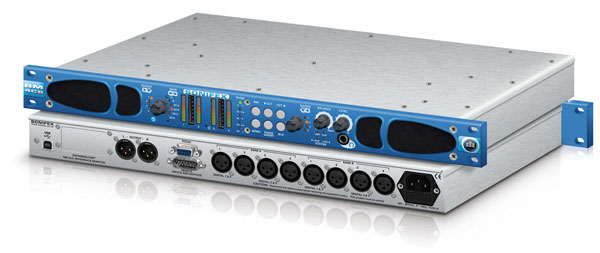
The RM-4C8 offers the same functionality as the RM-2S4 but with an additional source selector so that any of the 4 channels in the selected group, or bank, can be monitored independently on left and right speakers.
Also, 4 meters are provided so that every channel in the selected group, or bank, can be visually monitored and 4 expansion port groups of 4 channels are allowed, so that all audio channels in an HD-SDI signal can be monitored, using the optional RM-HD(E)1 cards.
The audio inputs on the RM-4C8 are auto-sensing, for digital AES/EBU using the left input XLR, or both XLRs for analogue inputs. The inputs can be used in any combination of analogue or digital.
With full remote control via GPI, RS232 or USB, a 5 band parametric equaliser, 6 front panel modifier buttons and the ability to take the optional HD-SDI expansion cards, the RM-4C8 is a flexible and versatile monitoring solution.
The same high level of care has been taken in the design of the RM-4C8 as in the RM-2S4 to ensure that it will be the best sounding 1U rack-mount audio monitor that you listen to.
RM-2S10 Reference Monitor, 2 LED meters, 10 stereo channel audio inputs.
Analogue inputs can be balanced or unbalanced in any combination. The digital inputs have switchable AES/EBU termination for (close-range) bridging operation and there is extra global input gain available for both analogue and digital low-level sources.
Sources (and additional banks of sources, if fitted) are selected via a front panel rotary encoder, with clear LED indication of the current selection. On the RM-2S10, the Source LEDs also act as signal present indicators. A pair of line-level audio outputs, configurable as analogue or AES/EBU digital, follow the selected source at either a fixed level or one mirroring the loudspeaker volume.
The level of the chosen source is displayed on a pair of bright, multicoloured 53-segment bargraph meters, with a choice of seven accurately modelled scales/responses to suit different applications and local preferences. Clear scale labels are provided for you to chose the scale displayed and the meter brightness can be adjusted from the front panel. A separate phase meter indicates channel correlation or phase error conditions. On the rear panel, open-collector alarm outputs provide hardware indication of sustained underlevel, overlevel, phase errors and digital source lock.
Six illuminated pushbuttons provide access to a range of audio ‘modifiers’ – instant dimming of the volume, individual muting of each audio channel, stereo-to-mono conversion, phase inversion and Middle+Side transcoding. On the rear panel, logic-level inputs allow direct remote access to the DIM and MUTE functions.
The three-way loudspeaker system is fed via a DSP-based active crossover and a trio of highly efficient Class-D amplifiers. Careful attention to driver selection, materials and case design, plus active DSP equalisation, has ensured a flat response and outstanding reproduction from such a shallow unit. A protective limiter prevents damage to the loudspeakers under overload conditions and the front-panel headphone socket automatically mutes the internal loudspeakers when a plug is inserted. A Balance control allows you to alter the stereo imaging of the left and right channels.
A further five-band parametric equaliser can be accessed for room-equalisation purposes via Sonifex SCi Windows-based remote control software. Source selection, status monitoring and unit ID functions, plus firmware updates to add extra functionality, are all accessible remotely via both USB and RS232 connections in conjunction with Sonifex SCi software. The open control protocol also allows operation with terminal programs or customised applications.
Optional additions to the RM-2S10 include HD video input expansion cards, allowing multiple AES groups embedded within an HD-SDI or SD-SDI signal to be de-embedded and monitored, either with (RM-HD1E) or without (RM-HD1) Dolby® E or Dolby® Digital encoding.
The RM-2S10 unit operates from global mains voltages (85-264V AC, 47-63Hz) without adjustment.
Net-Log Network audio logger
Net-Log is a dedicated hard disk based 4 channel audio logging recorder designed for the recording and archiving of live events that extend beyond the capacity of normal recording devices. Material is MPEG compressed and available for replay in high quality mode or converted to low quality mode as it is aged for archival recovery. Audio material can be accessed via desktop PC's within a network and grab files can be emailed as required. Net-Log is suited to radio station program logging, Conference records for councils, corporate board rooms or teleconferencing.
Brochure: http://www.sonifex.co.uk/company/logos-images/catalogues/netlog.pdf
Mentor Time Server
The Mentor Time Server is software which runs on a MS-Windows XP/Vista/Windows 7™/Windows 8 PC and synchronizes a number of MS-Windows XP/Vista/Windows 7™/Windows 8 client machines or Sonifex Net-Log units to its time. The client PCs or Net-Logs read the server time and have their time set using TCP/IP at regular intervals.
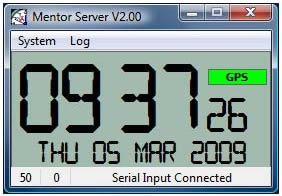
Mentor Server must be run as an administrator on Windows 8 otherwise you cannot connect to any NTP remote servers.
Clock SourcesMentor Server can be synchronised to these reliable time sources:
- NTP (Time servers on the Internet)
- Global Position Satellite (using Sonifex GPS-1 Antenna)
Brochure : Mentor Server & Client User Guide >
Mentor Server & Client Download >
S0 Digital/Analogue Radio Broadcast Mixer
 The S0 is a high quality yet simple to operate radio broadcast mixer ideally suited to community radio stations, for educational purposes and for internet radio. Easy to understand, the S0 includes a telephone hybrid for making and recording telephone calls and a 3.5mm stereo jack for plugging in an mp3 player. The addition of a USB port allows for recording to a PC and for playing a PC automation system directly through the mixer. The headphone outputs have a built in limiter to offer hearing protection and the studio speakers mute when a microphone fader is open, with automatic mic live sign switching. The S0 allows presenters and DJs to be up and running quickly with a fully featured radio studio mixer.
Brochure : http://www.sonifex.co.uk/company/logos-images/catalogues/s0.pdf
S2 On-Air mixing console
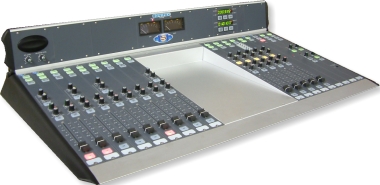
S2 is the latest release of on-air consoles from Sonifex featuring a selected mix of digital or analogue inputs. For studios in the transition from analogue to digital outboard gear this console offers a high quality solution. Using clean lines and a logical ergonomic layout of modular construction the S2 can cater for up to 30 channels of operator control in a variety of custom configurations.
Pro Audio Streamers
 The Pro Audio Streamers are a range of three IP to audio and audio to IP streamers which have professional analogue and digital inputs and outputs. They allow audio to be streamed around a building, wan or lan using IP audio and CAT5 cabling infrastructure.
There are three products in the range providing encoding/decoding and streaming:
The PS-SEND converts an audio input to an IP stream.
Brochure : http://www.sonifex.co.uk/company/logos-images/catalogues/prostreamers.pdf

The PS-PLAY reads an IP stream and outputs to balanced and unbalanced audio line levels.
Brochure : http://www.sonifex.co.uk/company/logos-images/catalogues/prostreamers.pdf
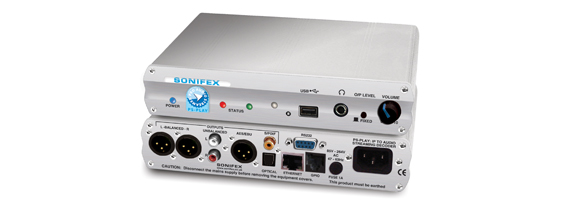
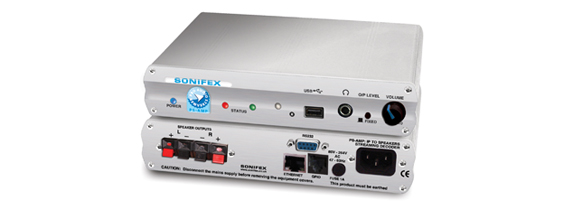
The PS-AMP reads an IP stream and outputs audio to stereo speakers.
Brochure : http://www.sonifex.co.uk/company/logos-images/catalogues/prostreamers.pdf
Typical applications include:
- As a backup STL (studio to transmitter link).
- For audio confidence monitoring in remote locations, such as at a radio transmitter site.
- For distribution of audio and music around a building, such as for passing audio to speakers in a conference room.
- As an internet-based IP music distribution system.
- As a tannoy, paging or IP based public address system.
- For in-house audio applications and distribution.
- For streaming internet radio in bars and clubs.
- For radio and music channels in hotel rooms distributed via an IP network.
- For playing audio from a PC, a jukebox application, or from a USB stick.
Related Links :
Handbook for Analogue Redboxes